INDUSTRY:
ARTS AND CULTURE, NON-PROFIT
TIMEFRAME:
5 WEEKS (PART-TIME)
ROLE:
UI/UX DESIGNER
TOOL:
FIGMA
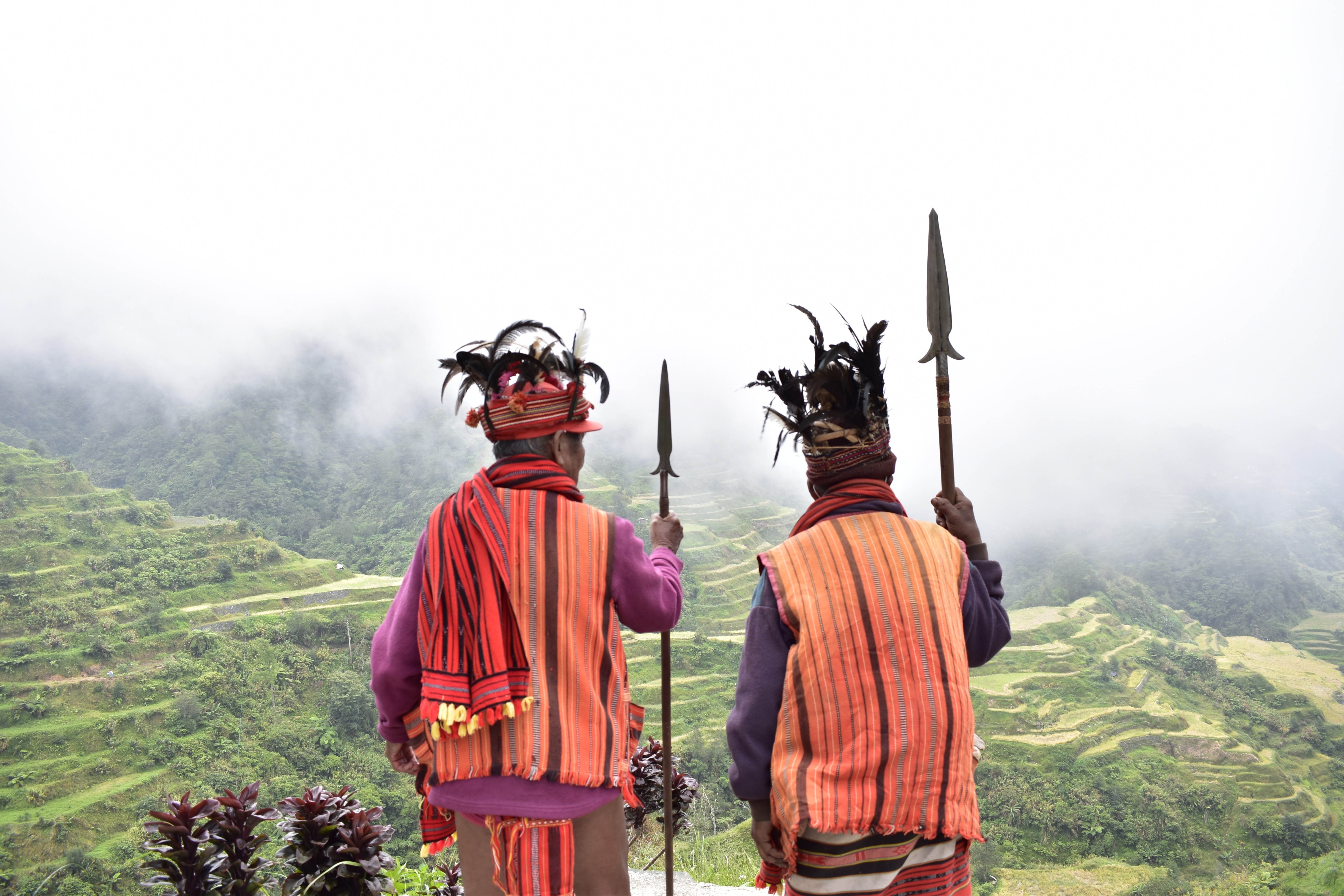
Creating a pilot website for a cultural NGO
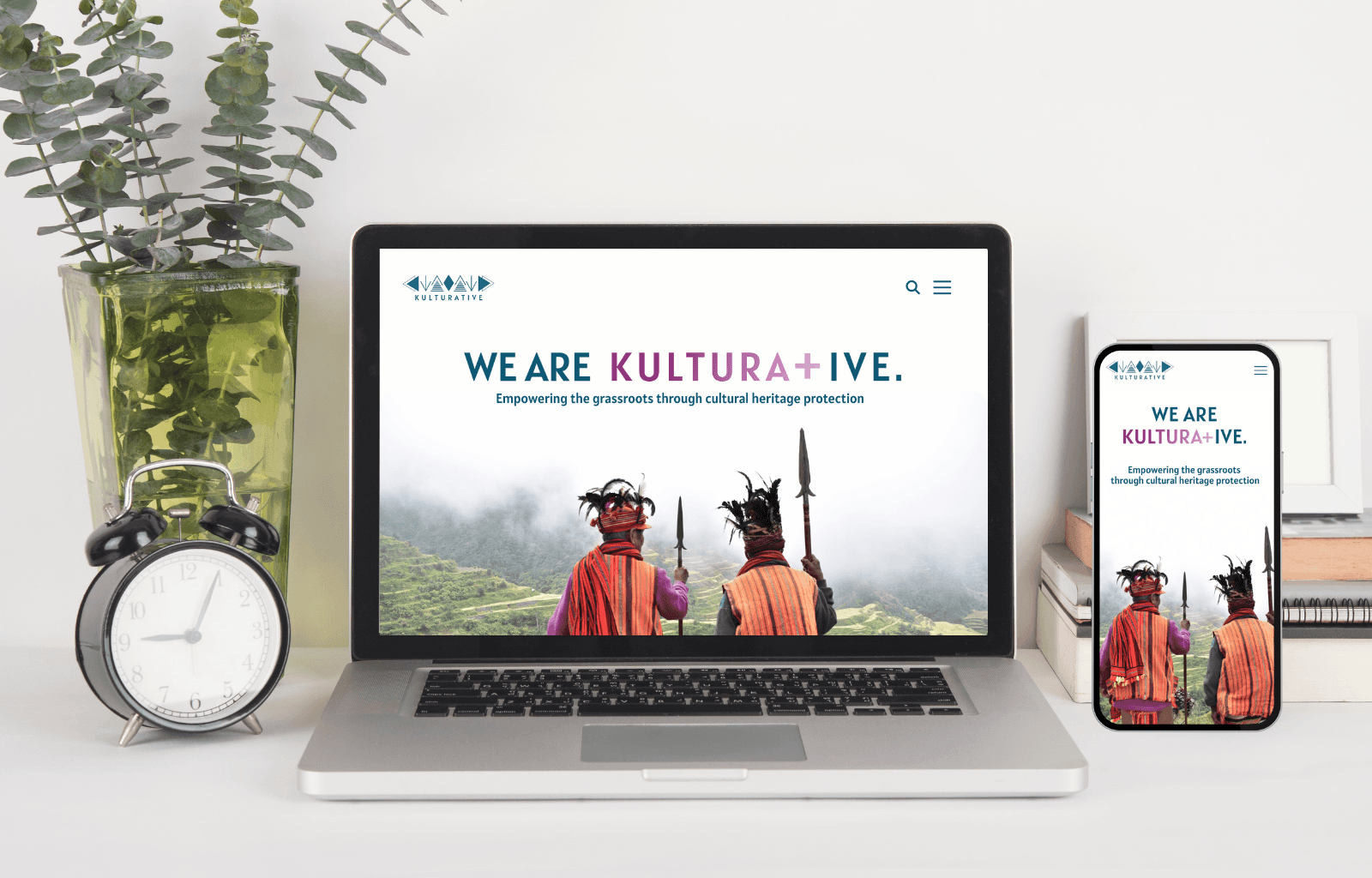
Kulturative: A digital doorway to cultural safeguarding and collaboration
Kulturative, Inc. is a non-profit cultural organization based in the Philippines. Their mission is to empower grassroots cultural communities and safeguard intangible cultural heritage through education, research, and documentation.
When Kulturative set out to build its digital presence, the goal wasn’t just visibility. It was cultural preservation at scale. The organization needed not just a website, but a digital home that could reflect its mission, spark public engagement, and support long-term collaboration. I designed an intuitive, culturally rooted platform that not only made their work accessible but also laid the foundation for future outreach, partnerships, and impact.
This project resonated deeply with me as it aligns with my background in cultural work. I led the website’s entire UI/UX process: research, wireframing and prototyping in Figma, user testing, and visual design. While working independently, I incorporated feedback from peers and cultural practitioners. This project took 5 weeks (part-time), from concept to interactive prototype.
problem.
Kulturative’s website seeks to address these core challenges:
Limited visibility and outreach: Without a dedicated website, Kulturative struggled to communicate its mission, attract support, or reach broader audiences beyond its Facebook page.
Lack of access and engagement pathways: Cultural workers and community members had no centralized place to access resources or participate through donations, volunteering, or collaboration.
Missed opportunities for growth and credibility: The absence of a credible digital hub hindered long-term stakeholder engagement, funding opportunities, and knowledge-sharing efforts.
Problem statements
The general public needs an engaging way to explore cultural heritage because understanding traditions and stories deepens appreciation and encourages active preservation.
Other cultural NGOs need accessible ways to connect, contribute, and collaborate because shared action and knowledge exchange lead to more sustainable and inclusive cultural preservation efforts.
Funding organizations need a clear understanding of Kulturative’s mission, impact, and community reach because transparent, values-aligned initiatives build trust and inform meaningful, purpose-driven investments.
research.
Based on the problems identified, I formulated some HMW questions:
How might we…
make cultural heritage feel relevant and engaging to everyday audiences?
encourage people to learn about and take pride in their cultural roots?
create a shared space where cultural groups can exchange ideas and resources?
lower the barriers to participating in cultural preservation work?
clearly communicate the value and impact of cultural work to potential supporters?
make getting involved in cultural preservation feel easy, rewarding, and impactful?
Research methods
To answer the identified questions and ground the project in best practices, I began with desk research on accessible design and nonprofit storytelling, focusing on how digital experiences can support inclusivity while emotionally connecting with diverse audiences. This included reviewing mission-driven organization websites and their narrative structures.
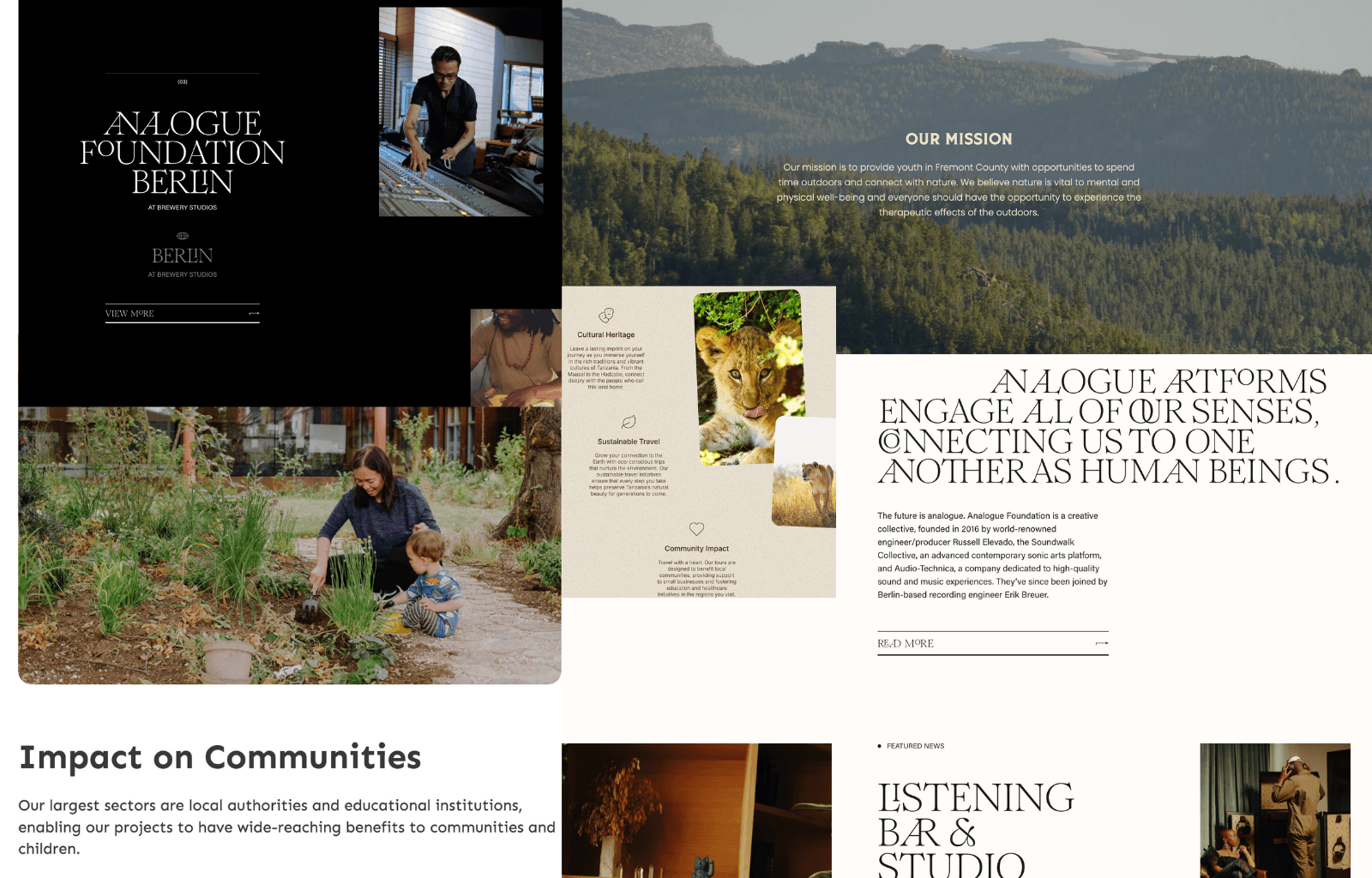
I also conducted a comparative analysis of well-designed platforms with similar cultural or nonprofit goals, identifying patterns in layout, content structure, and interaction design. These references served as benchmarks to ensure the site not only looked credible but also encouraged meaningful user engagement.
Below are combined screenshots from some websites related to non-profit work or cultural initiatives
Key user research insights
From the research, core themes emerged:
Visual storytelling increases engagement: Users respond positively to the use of strong visuals because it makes the cultural content more emotionally resonant and engaging.
Simplicity improves usability: Users emphasize the importance of simple navigation and a clean layout to help them focus, especially when dealing with unfamiliar or dense information.
Balance of inspiration and clarity is essential: Users prefer experiences that are both visually inspiring and easy to navigate, allowing them to absorb content without feeling overwhelmed.
Simplicity supports collaboration: Users need simple and clear guidance on how to contribute or get involved.
Impact on design
These insights guided a clean, structured layout with strong imagery, initially designed for desktop and had been optimized for mobile use to ensure full responsiveness and accessibility.
design.
Each major insight from the user research directly influenced my design decisions:
Visual engagement → Use full-bleed images and cultural motifs to visually immerse users and make cultural stories more emotionally resonant.
Usability → Simplify site navigation with a clean layout, consistent visual hierarchy, and intuitive structure to reduce cognitive load.
Balanced experience → Combine inspirational visuals with concise copy, whitespace, and accessible fonts to keep users engaged without overwhelming them.
Support for collaboration → Integrated clear calls to action for partnering, donating, and volunteering, along with accessible forms and content that explain how users can get involved in meaningful ways.
These are in addition to the direction provided by Kulturative’s existing brand book, which informed color palette, typography, and visual tone. This ensured brand consistency and streamlined design decisions. I also used their curated photo library to incorporate authentic cultural imagery throughout the site. Instead of creating a new visual language, I built on their assets to design a layout that felt both respectful and user-friendly, prioritizing clarity and simplicity, strong visual hierarchy, and storytelling.
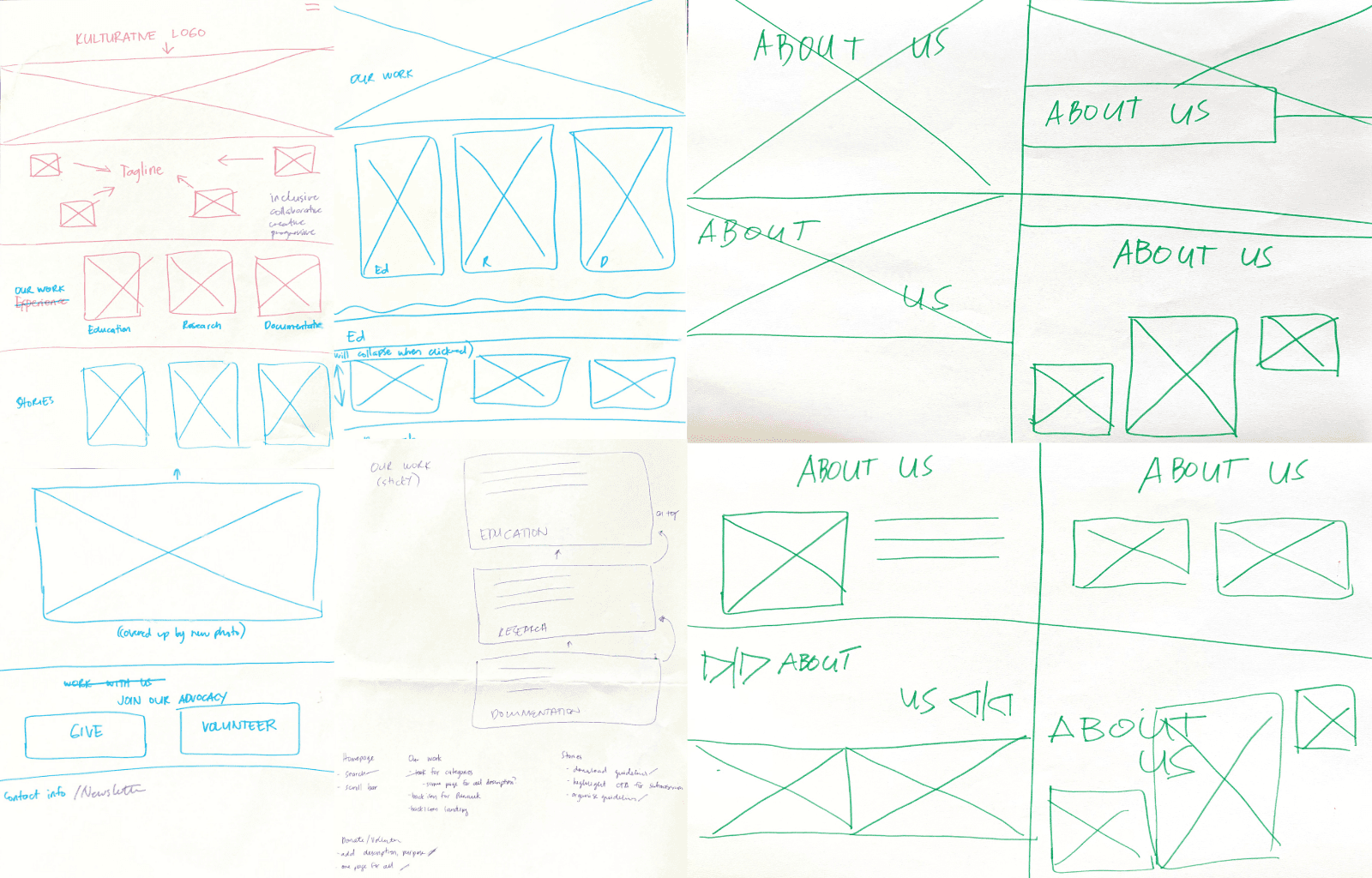
I started ideating the website layout and features by sketching on paper before creating lo-fi and hi-fi mockups and prototypes.
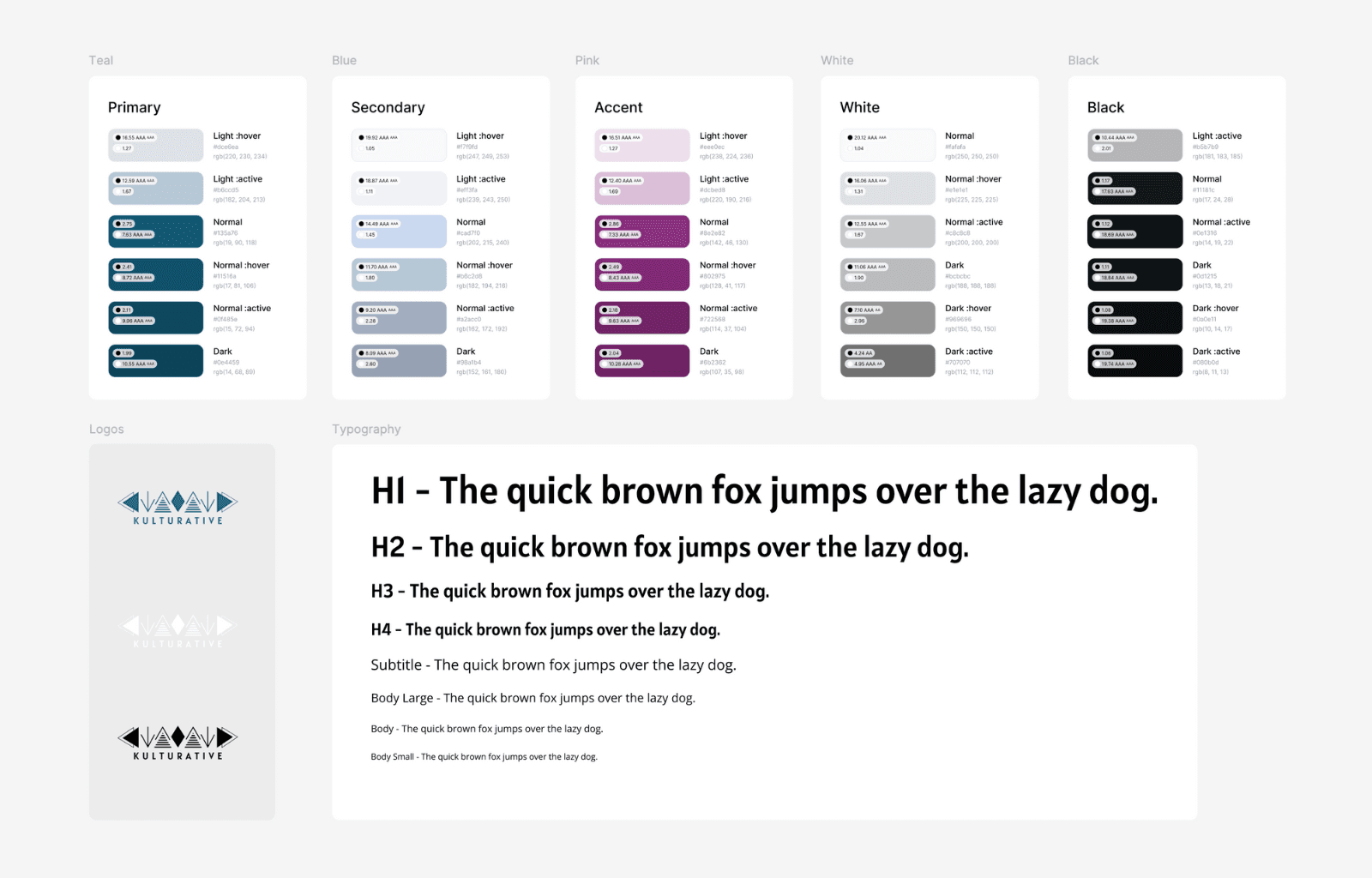
I created a simple design system for Kulturative in line with its brand book. Below are its logo, color palette, typography, and some design components.
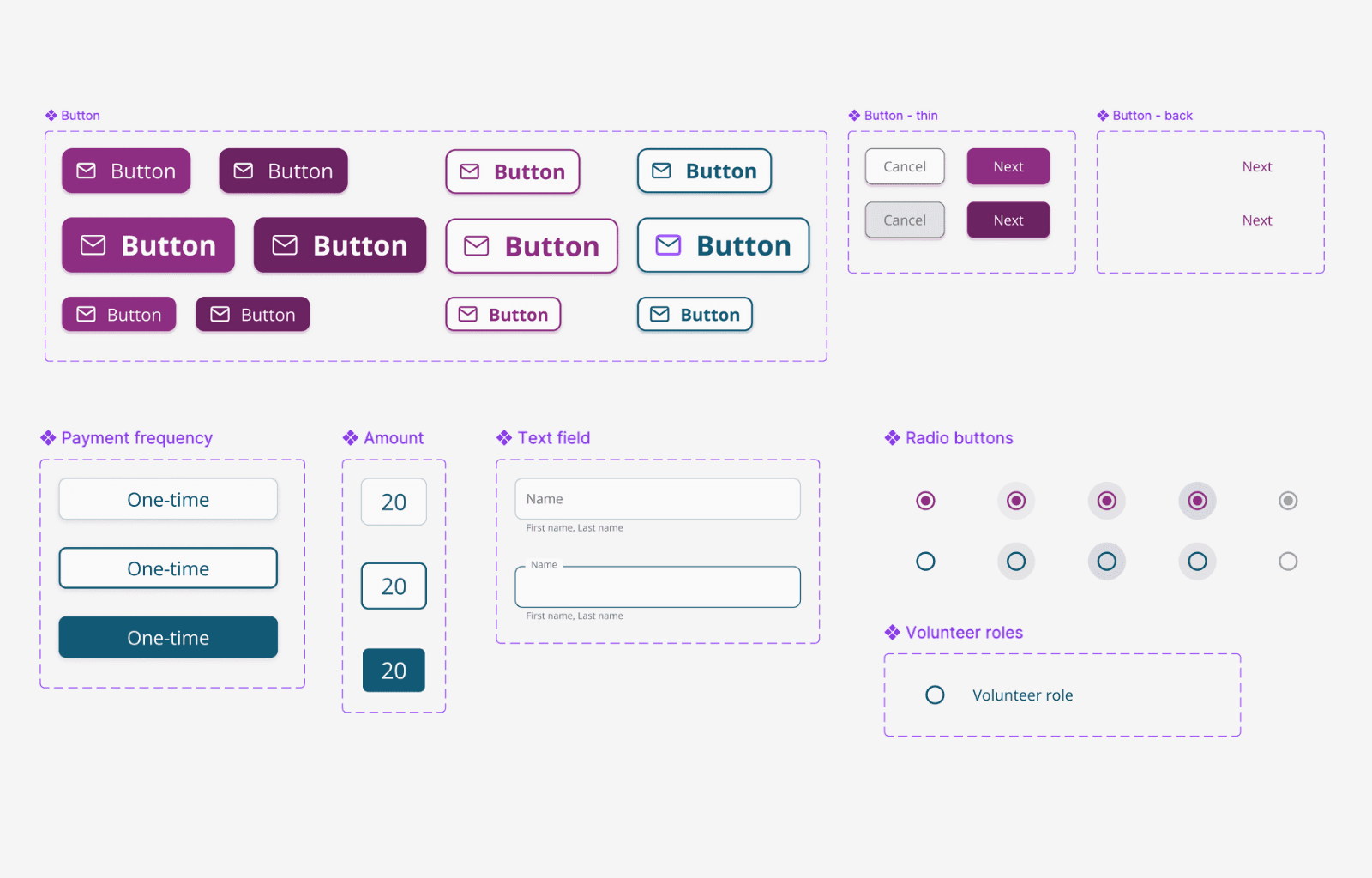
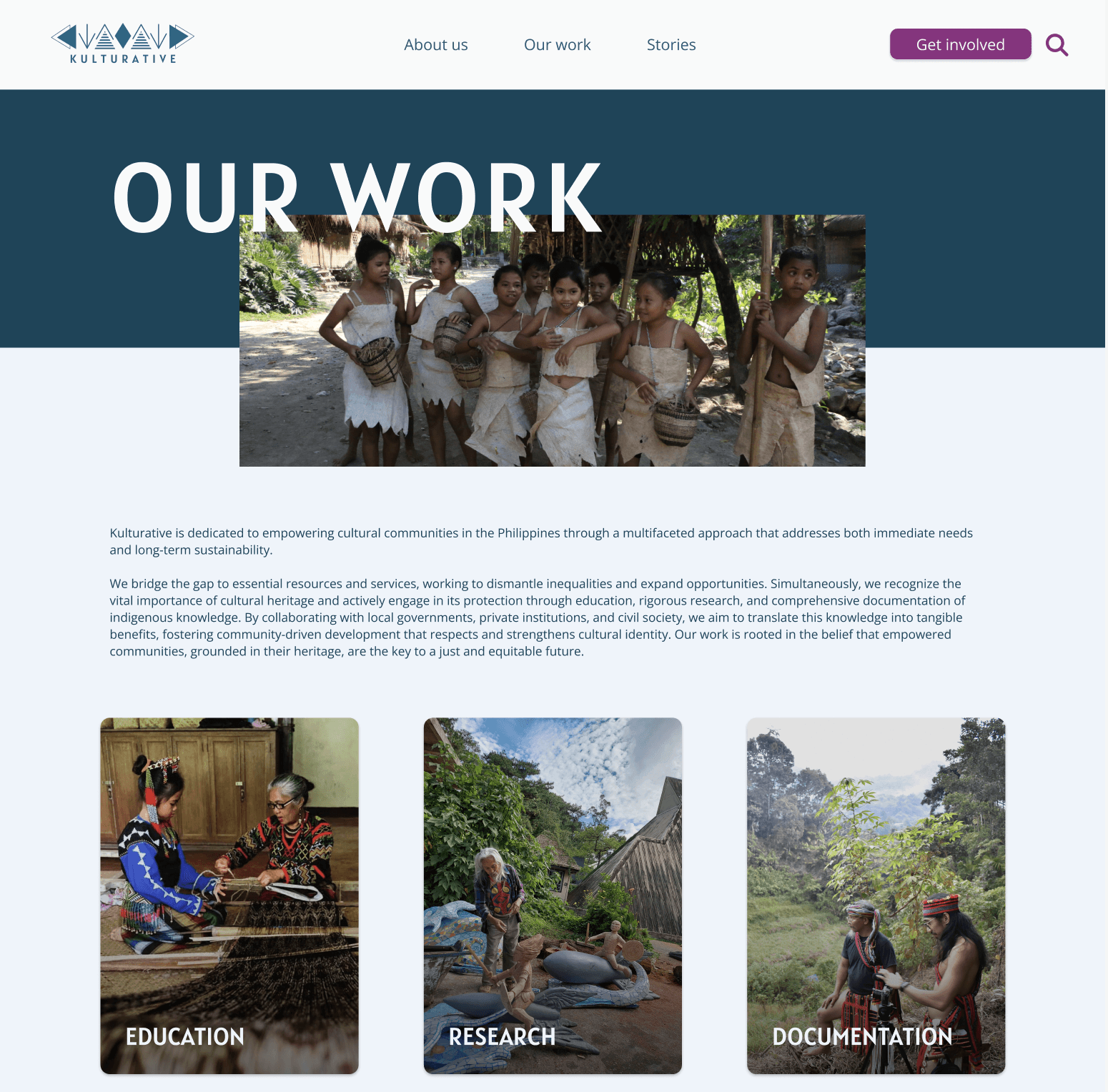
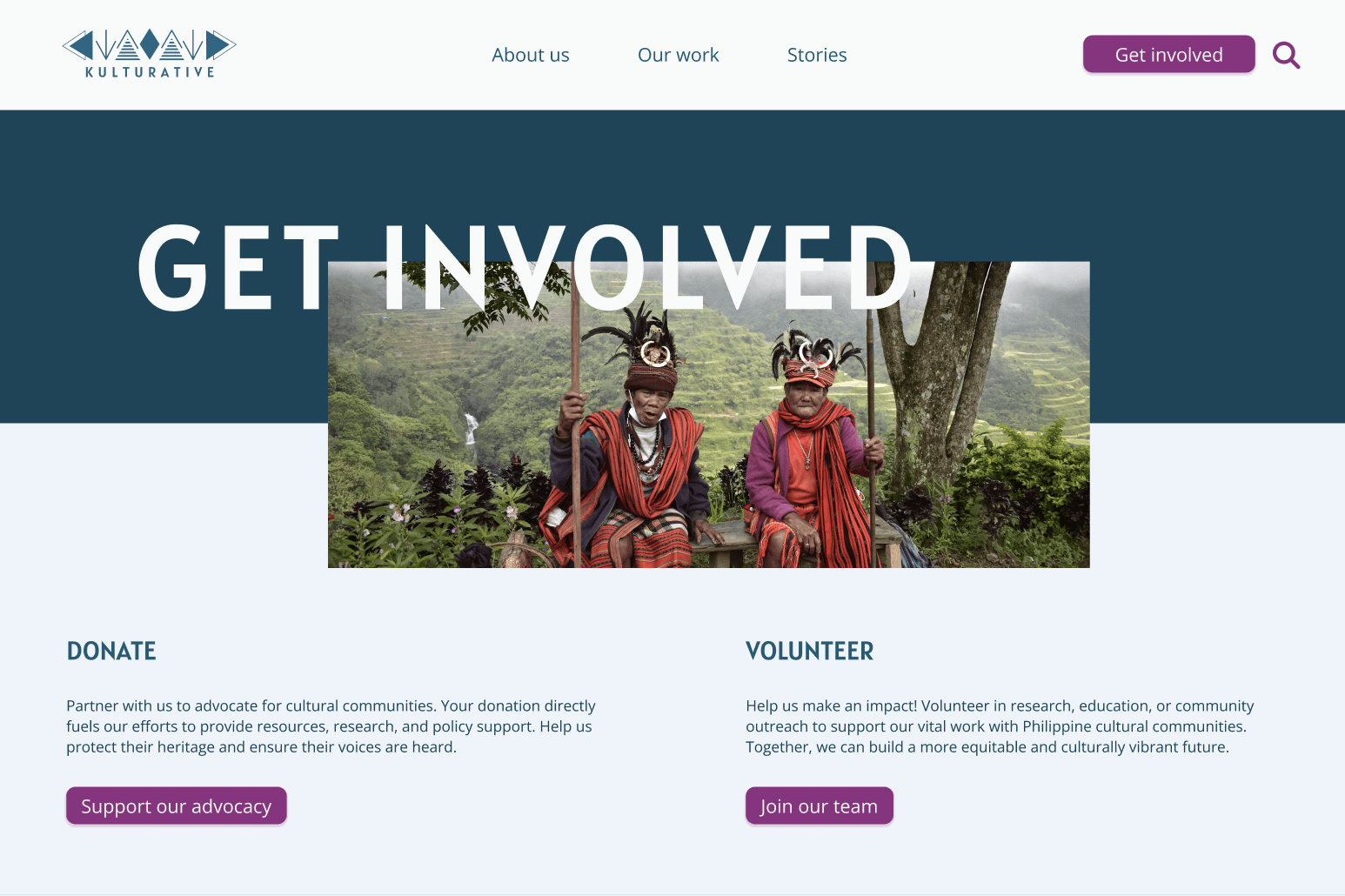
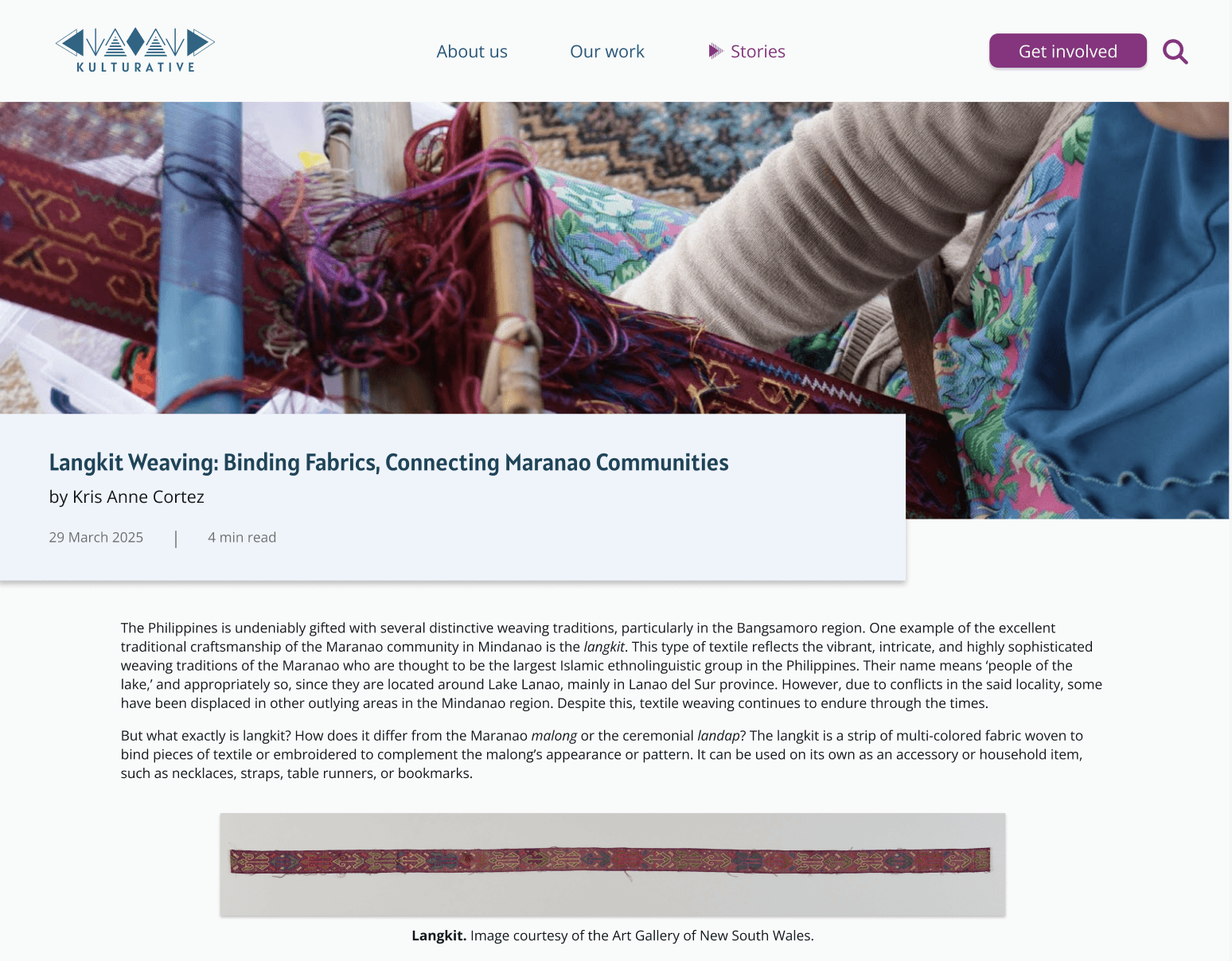
Below are some screenshots of hi-fi mockups for Kulturative website on desktop.
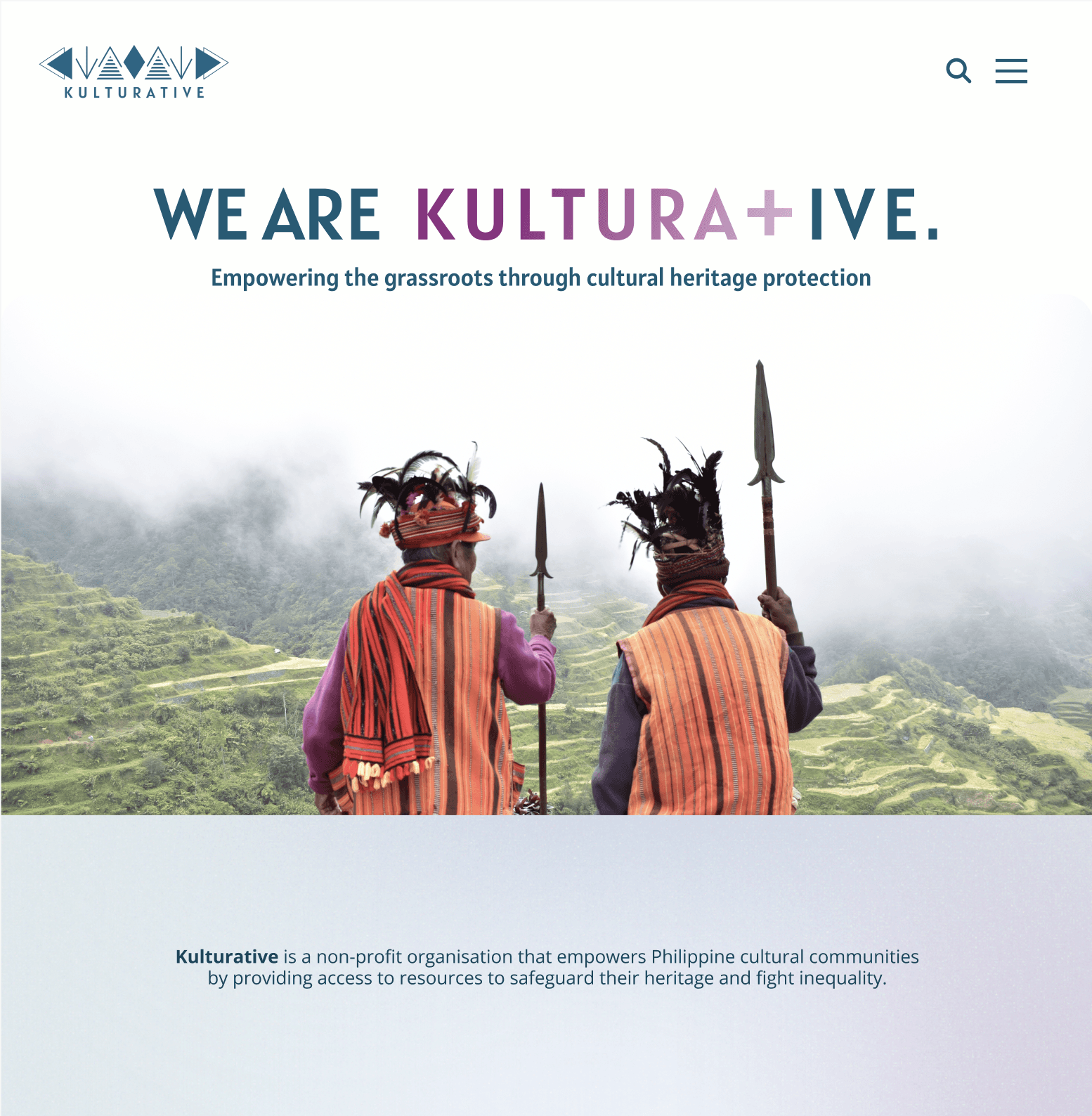
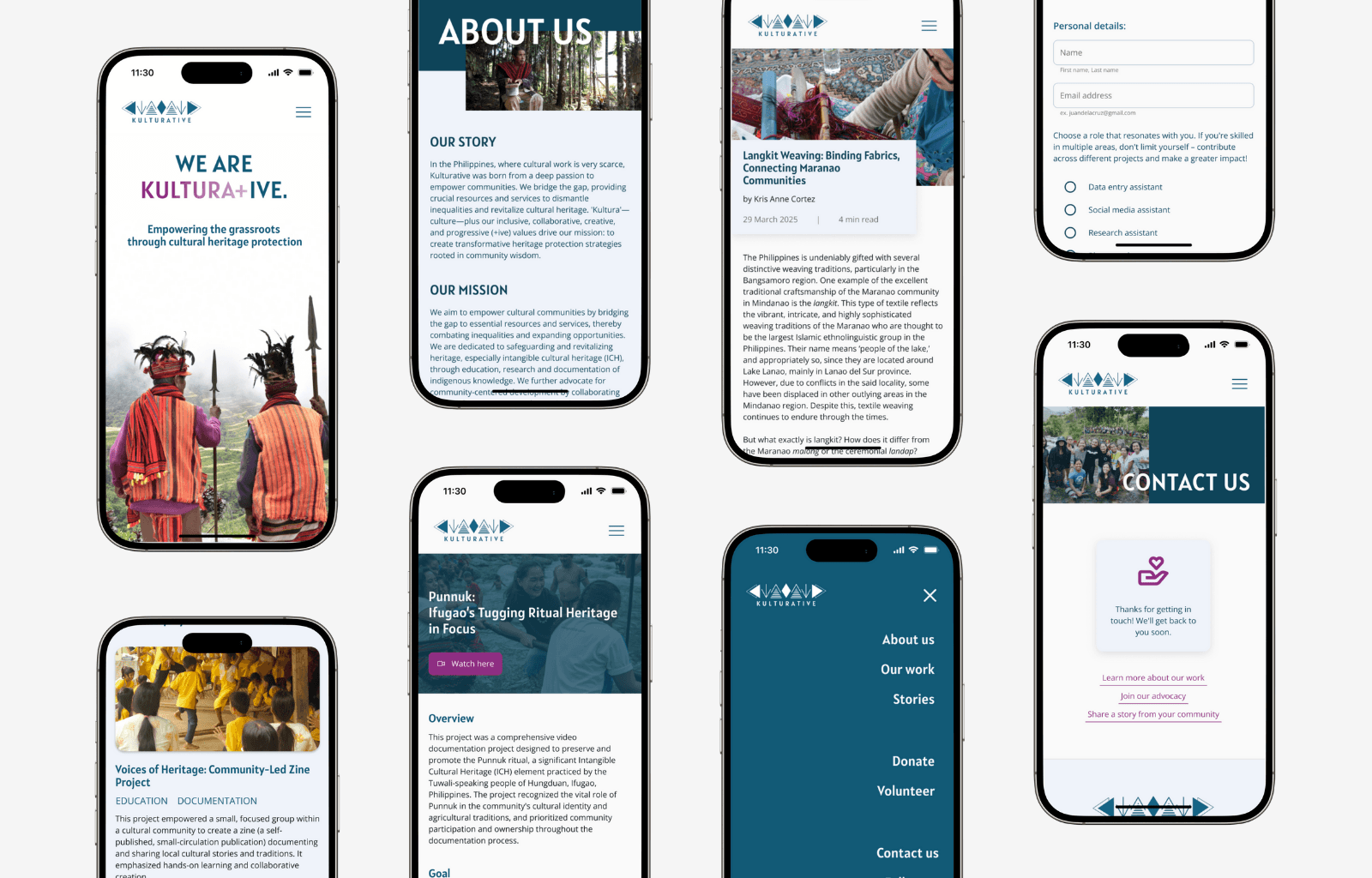
Below are some screenshots of the mobile web version.
User testing
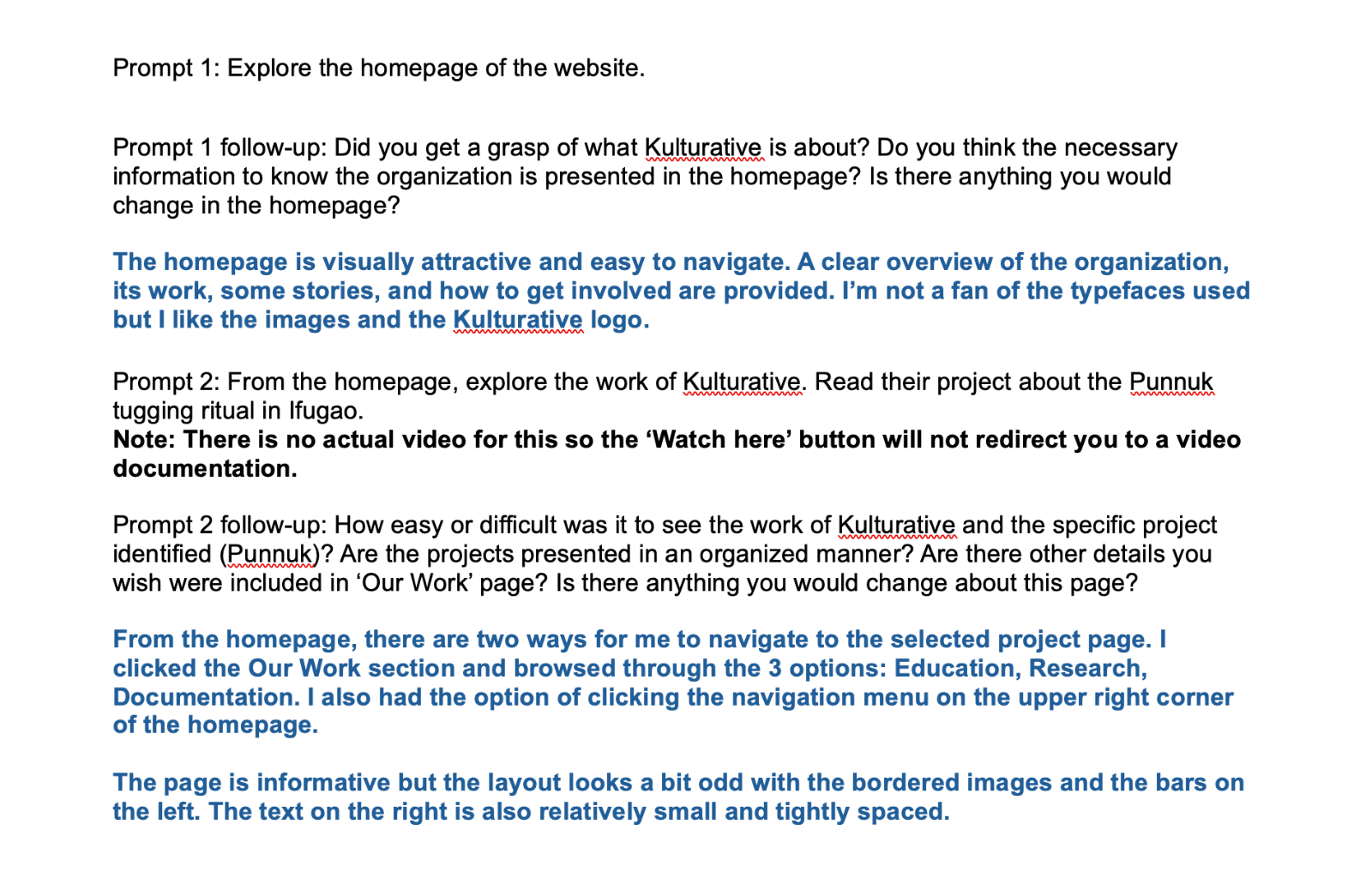
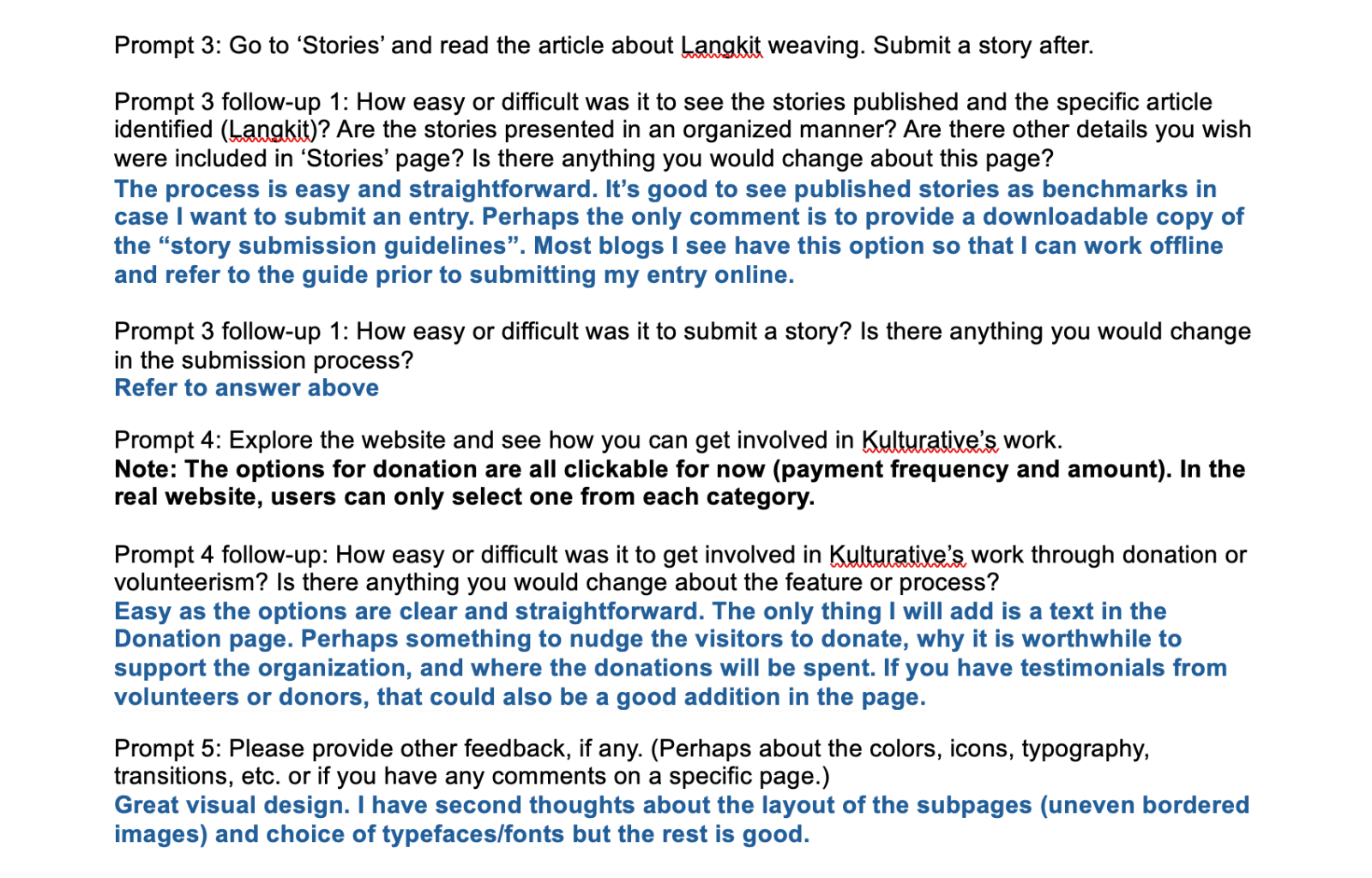
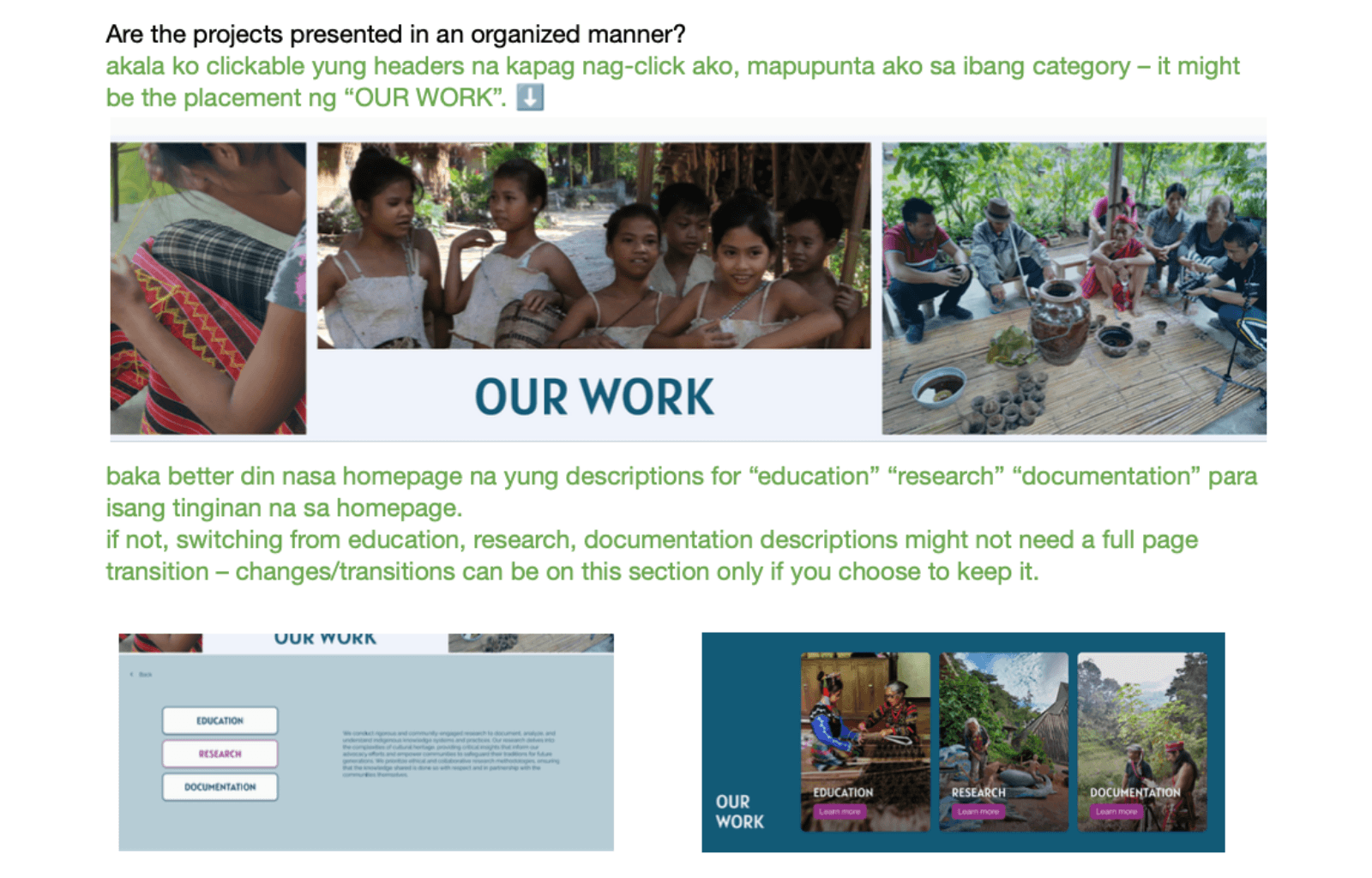
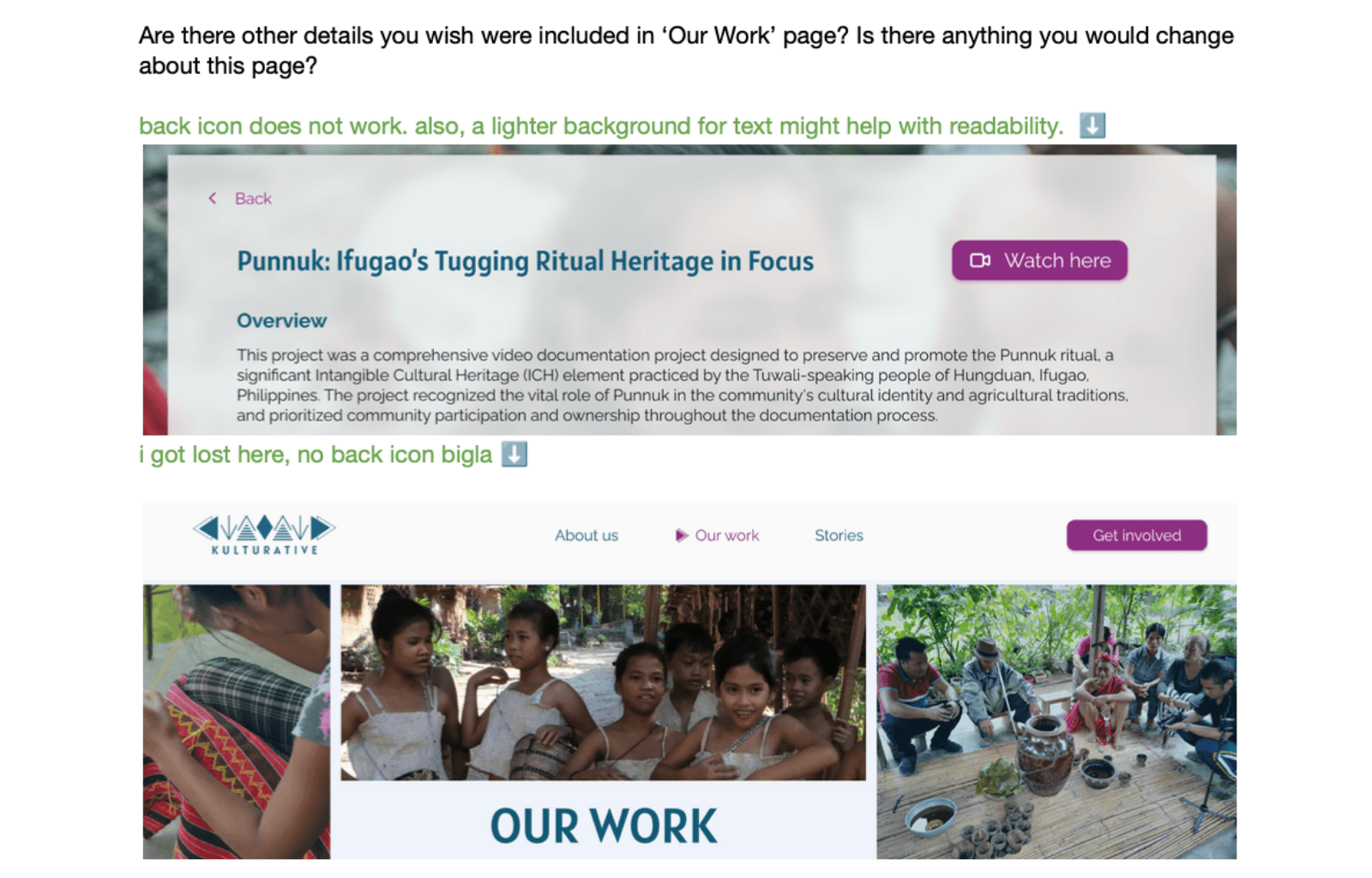
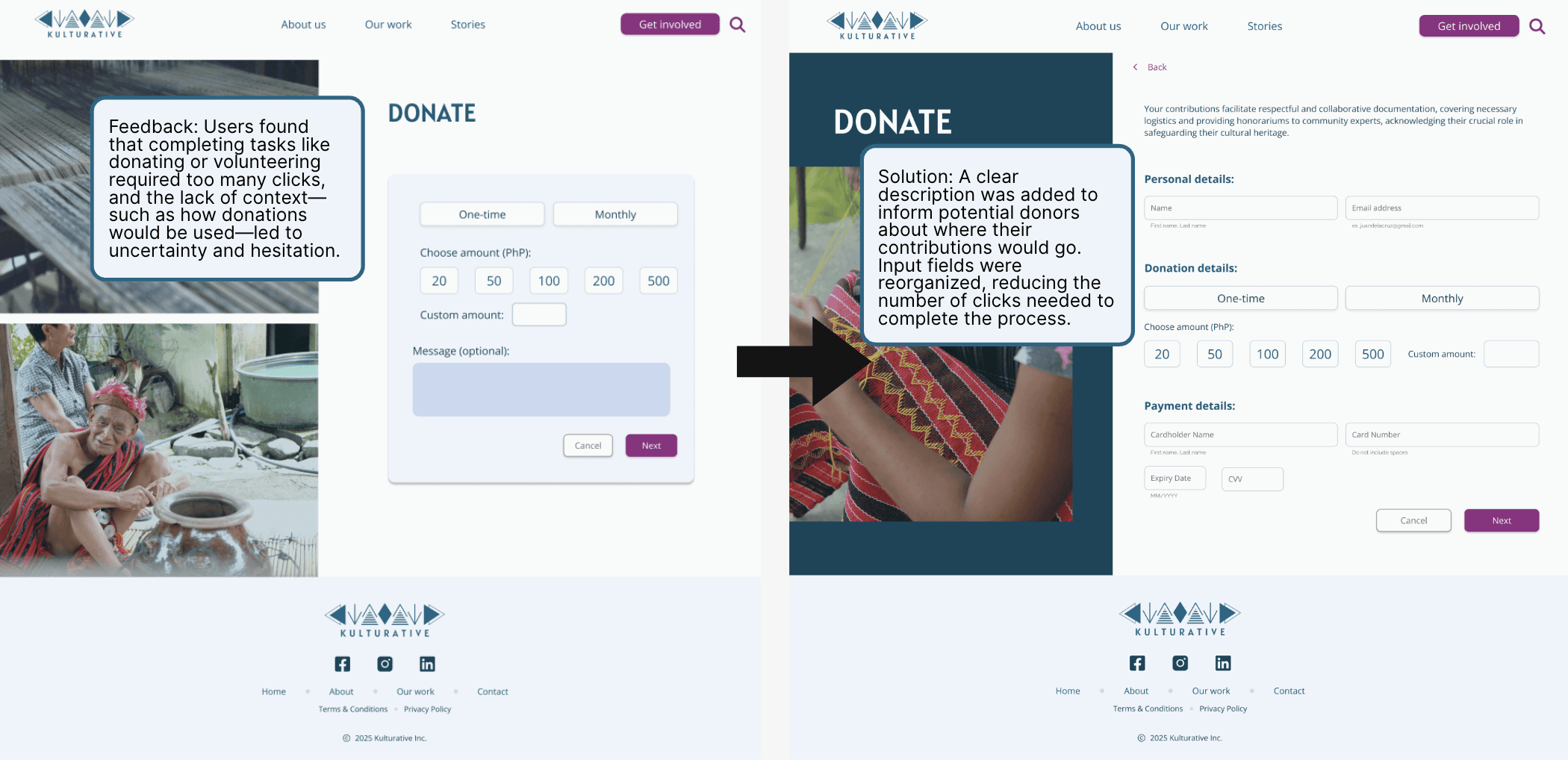
I conducted unmoderated testing with three users through informal interviews and a short survey I developed. Feedback was mostly positive, wherein users appreciated the clear navigation, engaging visuals, and cultural relevance. Key areas for improvement included non-functional buttons, lengthy call-to-action flows, unclear descriptions, and alignment issues. Large header images also affected load times. These insights informed the next round of design refinements.
Some feedback from users taken through unmoderated testing
Key user testing insights
Based on the user testing feedback, the following insights were identified:
A simple, well-structured layout enhances usability and helps users explore content confidently.
Strong, context-aware imagery strengthens emotional connection and increases user engagement with the content.
All interactive elements must be functional during testing to build trust and provide a smooth user experience.
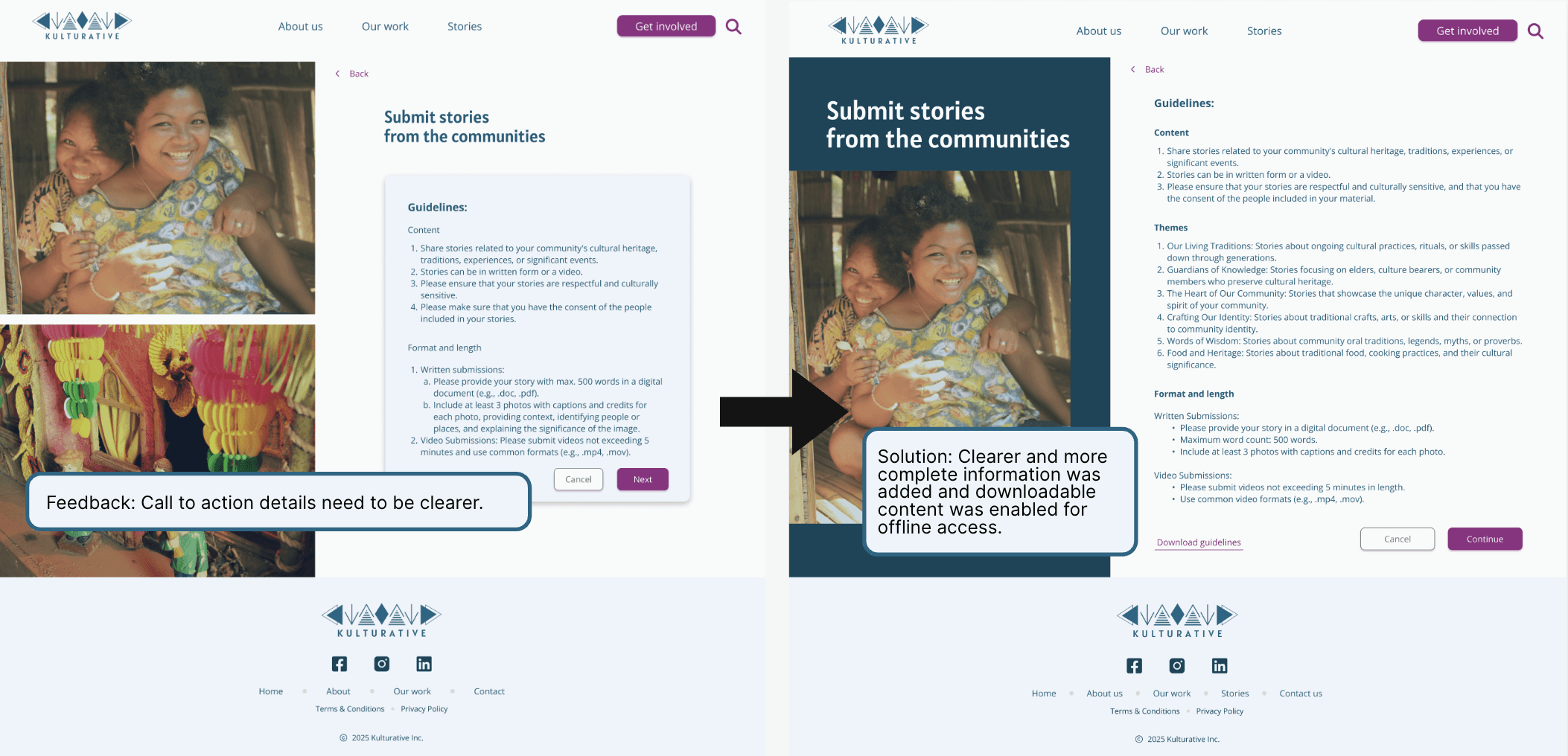
Calls to action must be clear, concise and purposeful to guide users toward meaningful interactions.
Careful alignment and spacing are essential for maintaining readability and visual harmony across devices.
Iterations
Based on these insights, the following iterations were done to improve user experience:
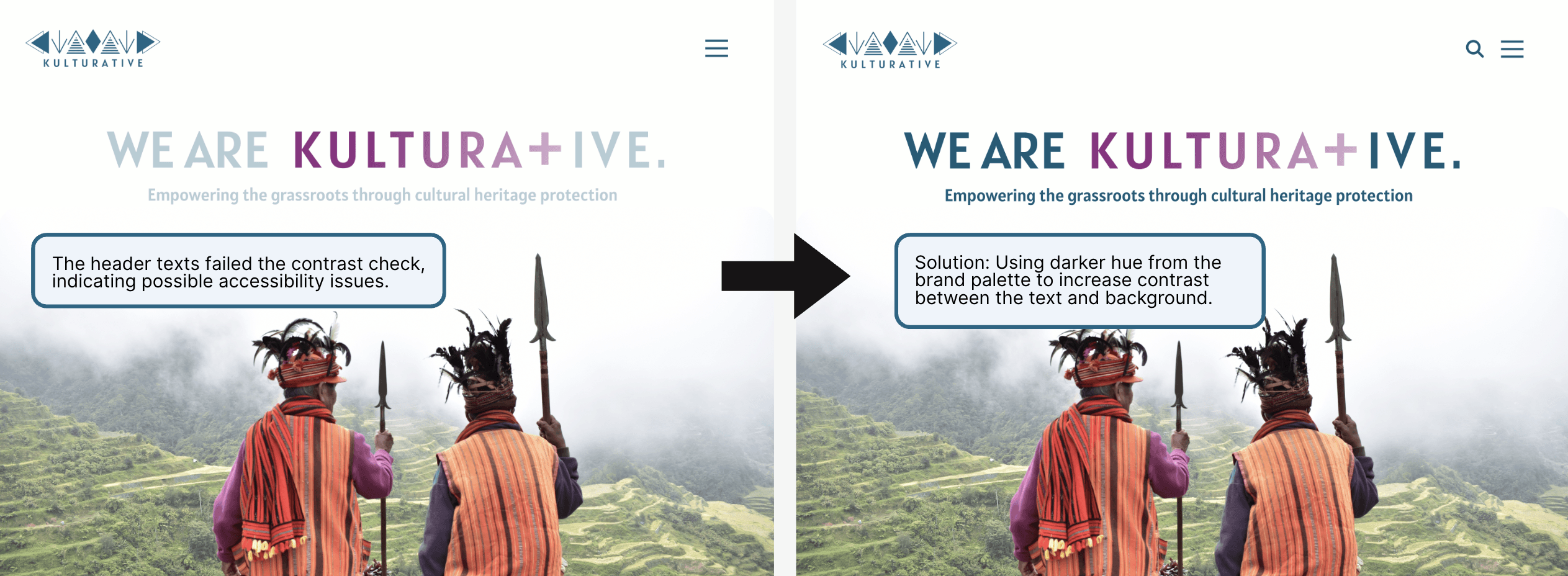
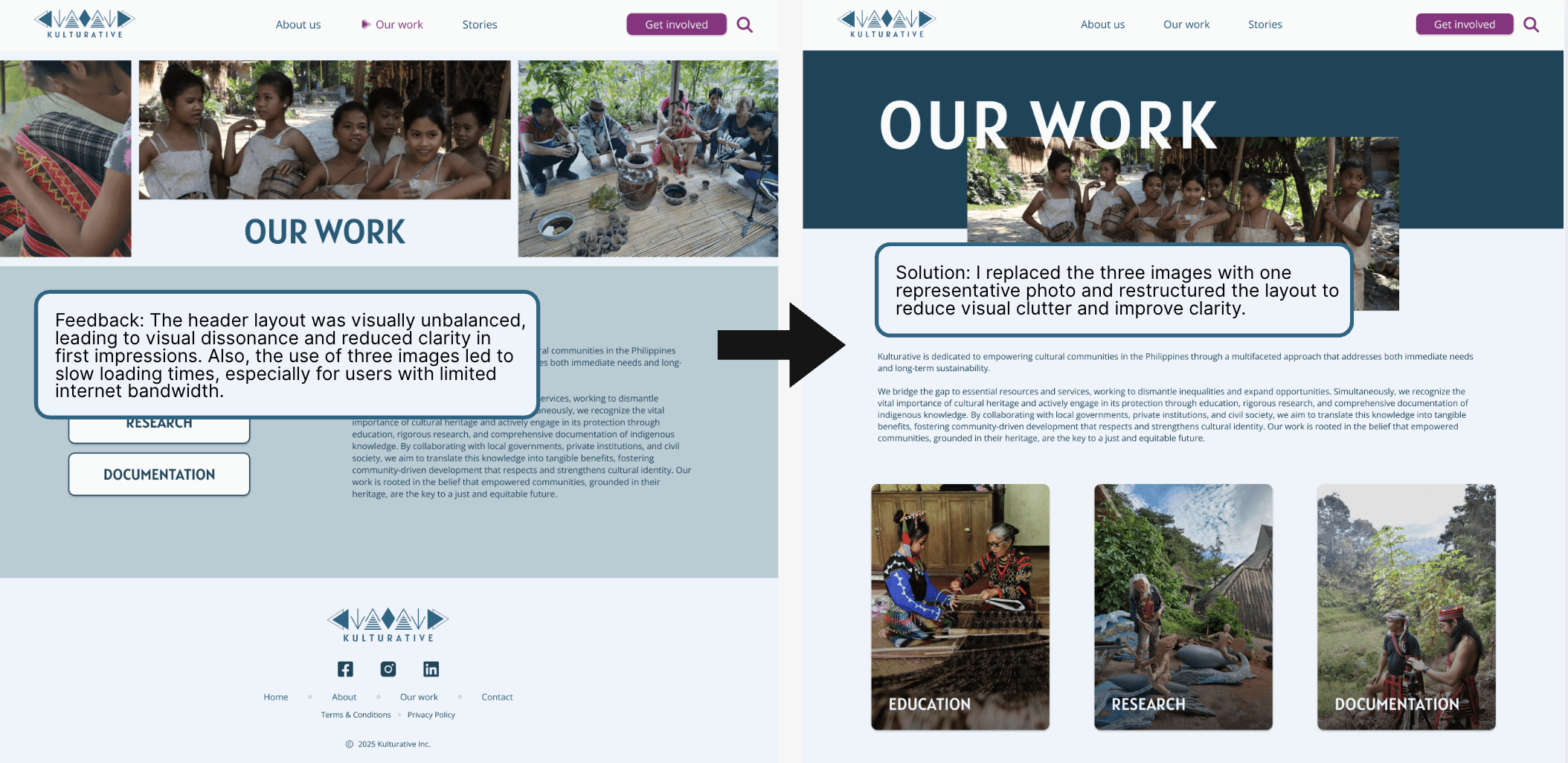
Improved visual hierarchy by redesigning header and reducing hero images for faster load time
Added a search button and kept the hamburger menu for a clean, user-friendly homepage
Consolidated content on key pages (e.g., Our Work, Donate) to streamline navigation and reduce cognitive load
Enhanced story submission experience with a clearer CTA, downloadable guidelines, and a step-by-step structure
Polished navigation and increased accessibility with footer links, consistent homepage navigation via logo, and better contrast for readability
Based on the user testing feedback, I made key iterations to improve Kulturative's website.
results.
The prototype achieved a 100% success rate in user task completion after the iterations, with all three users describing the experience as intuitive and engaging.
Impact on users
During testing, users gained a clear understanding of Kulturative’s mission and described the site as “easy to navigate,” “straightforward,” and “visually attractive." Once the website goes live, it has the potential to become a trusted go-to source for those seeking to engage with Philippine culture, empowering users to explore cultural stories, connect with ongoing initiatives, and participate in future collaborations. The platform’s intuitive design and engaging visuals could foster deeper awareness, encourage storytelling contributions, and increase community-driven cultural preservation.
Impact on business
Kulturative stands to benefit from increased visibility and credibility among cultural institutions, potential donors, and community collaborators. The platform can support stronger outreach efforts, open doors to new funding and partnership opportunities, and provide a scalable foundation for future initiatives such as virtual events, community storytelling programs, and multilingual content expansion.
Lessons learned
Shorter user flows proved more effective in reducing drop-off, and storytelling significantly boosted engagement when paired with strong usability. Media optimization was essential for accessibility, especially in low-bandwidth settings, and early feedback revealed important gaps in user flow and tone.
Areas for future improvement
Add microinteractions for richer user feedback
Offer multilingual support for broader inclusivity
Rotate hero images to reflect more communities, highlighting diversity
Implement or plan for a CMS integration for easier updates by the Kulturative team